
Large Workpiece Machining for Stable Precision in Heavy-Duty Applications
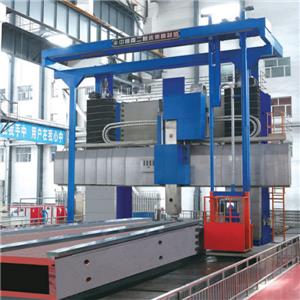
In industries such as heavy machinery, energy equipment, shipbuilding, wind power equipment, and aerospace, the machining of large and complex components often involves relatively high cutting loads and long machining cycles. For these machining tasks, being able to machine large workpieces is only the basic requirement. More importantly, machining accuracy needs to remain stable throughout the machining process.
This is especially important when multiple machining operations, such as milling, boring, drilling, and tapping, are involved. 天美直播rigidity, guideway performance, transmission accuracy, and spindle capability can all affect the final machining quality. Therefore, for large workpiece machining, maintaining stable accuracy under heavy cutting and continuous machining conditions is an important consideration when selecting and configuring a machine tool.
1. Key Factors Affecting Precision Stability in Large Workpiece Machining
Large workpieces are typically characterized by large dimensions, high weight, and long machining cycles, while the cutting forces generated during machining can also be relatively high. Under these conditions, the structural and motion performance of the machine tool directly affects machining stability.
· 天美直播rigidity is the foundation of stability in heavy-duty machining. During heavy cutting, the machine needs to withstand relatively high cutting forces. If structural rigidity is insufficient, it may affect the stability of the machining process and make it difficult to maintain consistent machining accuracy. Therefore, for large and complex workpieces, a high-rigidity structure is an important condition for stable machining.
· Guideways and transmission systems directly affect machine motion stability and positioning accuracy. Large workpieces often require relatively long periods of continuous machining, during which the machine axes need to maintain stable and smooth movement. Low-friction guideways with vibration absorption capabilities can help reduce instability during movement, while high-precision transmission structures help maintain accurate positioning and motion response.
· Spindle performance is also an important factor in heavy-duty machining. Large components may involve different processes such as heavy cutting, deep boring, large-diameter hole machining, and precision milling, which place relatively high demands on spindle power and torque. A spindle with capabilities that match the machining requirements can better meet the needs of different machining conditions.
Therefore, machining precision stability for large workpieces is not determined by a single component. It is the result of the combined performance of the machine structure, motion system, spindle, and other related systems.
2. How to Maintain Stable Precision During Heavy-Duty Machining
For large workpieces, maintaining machining accuracy requires more than focusing on a single machine parameter. 天美直播configuration, machining methods, and stability during continuous operation all need to be considered.
· 天美直播configuration needs to match the actual workpiece and machining requirements. The????? variations from large workpieces mean that different workpieces will have varying requirements in spindle diameter, length of cutting area, power, and cutting heads. So, it is crucial to consider the specific machining requirement when choosing a machine tool, not just looking at the total size or one single machine feature.
· Decreasing the use of the repositioning as well as the repeated setups is one more method for increasing stability during processing of large ?????parts. (for a closer look at how to identify and reduce repositioning specifically, see our article on reducing repositioning in large-part machining).
· Stable operation during continuous machining is equally important.Heavy????? machining of big pieces often requires quite a few machining cycles and the machine has to deliver stable machining result for a long time. 天美直播tools that exhibit noticeable motion fluctuations or thermal stability problems during continuous operation can lead to machining inaccuracies.
As a result, heavy-duty long-term machining of large workpieces requires detailed consideration of structure of the machine including its guideways and transmission systems, capability of spindle, and overall equipment configuration so that all these components work together harmoniously to perform heavy-duty machining over a long period of ?????time.
3. Applying These Principles to Large Workpiece Machining
In actual large workpiece machining, the requirements discussed above ultimately need to be implemented through the specific structural and functional design of the machine tool. Rather than focusing on a single parameter, it is more important for the machine structure, motion system, spindle, and machining configuration to be properly matched to accommodate different large and complex components.
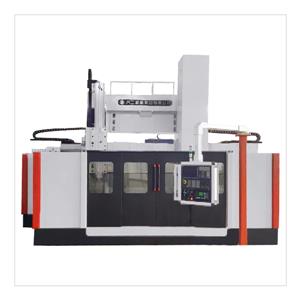
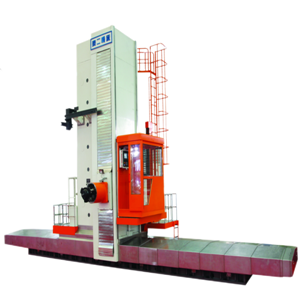
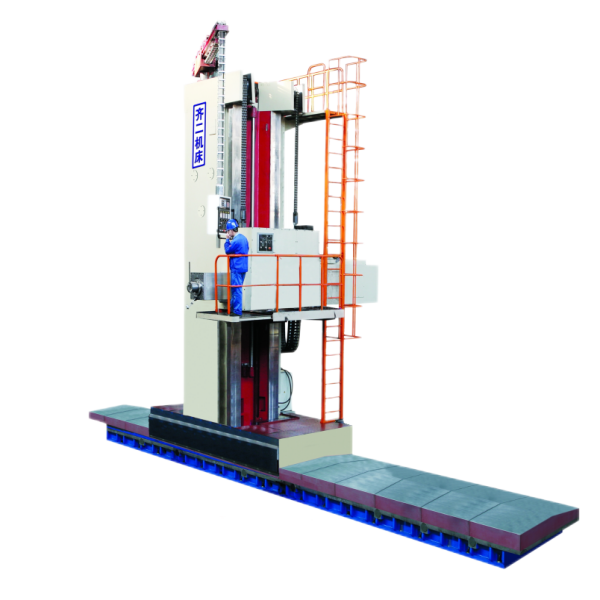
· In terms of structural design, a high-rigidity structure is an important foundation for heavy-duty machining equipment. For machining tasks that need to withstand relatively high cutting loads, a stable machine structure can provide reliable support for continuous machining. The structural design of a milling and boring machine such as a CNC floor type model needs to adequately consider the cutting loads generated during heavy-duty machining.
· The motion system can improve operational stability through different guideway and transmission methods. For example, multi-pocket closed hydrostatic guideways feature a low friction coefficient, vibration absorption, and smooth low-speed movement, and can be applied to the axis movement system of large machine tools. At the same time, when combined with high-precision transmission structures, they can further meet the requirements for positioning accuracy and motion stability during large workpiece machining.
· In terms of spindle configuration, high-power and high-torque spindle systems can cover machining tasks such as heavy cutting, deep boring, large-diameter hole machining, and precision milling. Using????? this spindle setup, it is possible to perform various machining steps on the material through different tools without having to completely separate the machining operations into their particular types.
· 天美直播structure and performance aren't the only factors that matter - there is also the fact of the way different machining processes are brought into one piece of work. When machining relatively large pieces that require a whole battery of machining operations, such as milling, boring, drilling, reaming, tapping, and grooving, arrangements like the combination cutter head, the extended cutter head, and the CNC turntable allow you to carry out more operations per ?????setup. These????? features allow for 5-side machining and difficult surface processing in the same workpiece which in return cuts down on the number of setups and repositioning of machine parts to a minimum.
Manufacturing with such features is also evident by the working of DALIAN WAJI’s top-tier heavy duty floor type CNC milling/boring machines. This heavy machine is made on platform series of TK69 and is designed with rigid frame, multi-pocket closed hydrostatic guideways, precision gears and spindle with high output, high torque for the machining of big and difficult machine parts for the heavy ?????industry. This????? type of machine tool is a high versatility equipment as it can accommodate various spindle diameters, stroke dimensions, power set-ups and tool attachments to name but a few so that the machine can be adjusted to a particular machining need, thereby the same machine can be used for different large workpiece machining tasks.
Conclusion
Heavy machining of large workpieces poses challenges that go beyond the size of the piece. More importantly, a machine has to be able to keep its machining capabilities consistent under conditions of deep cutting, uninterrupted working, and multiple simultaneous ?????machining. 天美直播rigidity, guideway and transmission performance, spindle capability, and appropriate machine configuration are all important factors affecting machining precision stability.
For the machining of large and complex components, selecting a milling and boring machine that matches the actual machining requirements can provide a more stable and efficient foundation for heavy-duty machining.
If you are looking for a milling and boring machine suitable for large workpiece machining, contact DALIAN WAJI to discuss a suitable machine configuration based on your specific workpiece and machining requirements.