
Reducing Repositioning in Large-Part Machining
In large-part machining, a workpiece often needs to go through multiple machining steps before it is completed. Because different machining areas may have different accessibility, machining directions, and process requirements, the workpiece may need to be re-clamped or repositioned during the machining process.
Repositioning does not necessarily mean that the machining plan is problematic. However, every additional adjustment of the workpiece position adds another step that needs to be controlled within the production process. In addition to the time required for re-clamping, confirming the positioning reference, interrupting the machining process, and coordinating different operations can also affect the overall workflow.
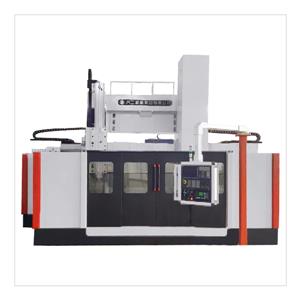
Therefore, for large parts, reducing unnecessary workpiece repositioning is not simply about making clamping faster. It requires looking at the entire machining process and determining which positioning operations are necessary and which can be reduced through a more appropriate CNC Large Vertical Lathe machining plan.
1. Why Are Large Parts More Likely to Require Repositioning?
Large parts often have relatively large dimensions and more complex machining requirements. The same workpiece may need to be machined in several different areas. When the current workholding setup cannot provide access to the next area that needs to be machined, the workpiece may need to be repositioned.
For large parts, however, the size, shape, and distribution of machining areas can make the process more complicated when planning the machining process for a CNC Large Vertical Lathe.
Repositioning,????? therefore, is generally the resultant of multiple factors. It depends on the geometry of the workpiece, different machining areas, and overall process planning.
Not considering all these factors during process planning might lead to actual production involving, for example, repeated re-clamping, re-alignment, or transfers of the workpiece between different machines. ?????
2. Repositioning Adds More Than Just Clamping Time
Beyond the fact that changing the location of the workpiece would need more time on the clamping and adjustment aspect, it also presents other problems, especially for big works.
· First, every new setup requires the position of the workpiece to be checked again. The operator needs to make sure that the workpiece is in the correct machining position and establish or confirm the positioning relationship required for the current operation.
· Second, when different machining areas on the same workpiece have a relationship that needs to be maintained, repositioning introduces another step that needs to be controlled during the machining process. Each time the workpiece changes position, the subsequent machining operations need to be checked to ensure that they can continue as intended.
· Repositioning can also interrupt an otherwise continuous machining process. When????? workpiece has to be transferred several times among different machines, the production stages will become more separable. Besides the machining time, handling, lifting, transferring, repositioning, and even checking back on the piece will contribute to the overall production process.
Thus, when you want to assess how repositioning affects, you don't only consider the duration of one ?????setup. It is more important to consider how many additional steps repositioning introduces into the entire machining workflow.
3. Rethinking the Machining Plan to Reduce Repositioning
Reducing repositioning does not mean that every large part must be completely machined in a single setup. When????? the workpiece is quite complicated, doing multiple setups is the normal part of the machining process.
The more realistic solution, though, is to decide beforehand when you finalize the machining process:
Which machining steps will require repositioning the workpiece?
This can only be decided based on the actual machining range of the CNC Large Vertical Lathe, the machining areas of the workpiece, and overall process arrangement.For instance, during Equipment Selection and Process Planning, the main machining areas of the workpiece are revealed first. Then, you will find out whether the machining range of the equipment you selected is sufficient for those ?????areas. If certain operations must be transferred to another machine, it is then worth considering whether this transfer is necessary and how it will affect the overall production process.
It is also important to consider how the workpiece will be stably supported and positioned during machining. For large parts, physically moving the workpiece may itself involve additional operations. The????? machining process can be made more continuous only with minimizing superfluous change of positions.
“Fewer setups” is just one aspect pursued, the deeper goal is to achieve a suitable correspondence among positioning of workpieces, cutting area, and manufacturing steps.
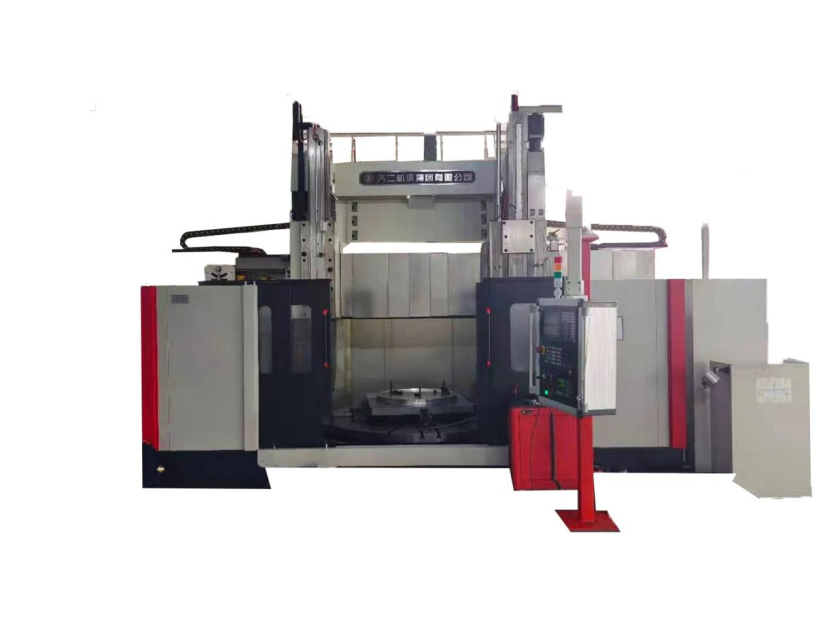
4. Which Large-Part Machining Situations Require More Attention to Repositioning?
Numerous repositionings may not be the case of every machining ?????task. Buyers????? and process engineers can evaluate this matter considering their actual production situations.
Determine whether the following descriptions match the features of the workpiece:
· Workpiece machining at multiple machining zones;
· Most of the machining areas are in different positions;
· Covering all machining zones required is challenging due to the current equipment's machining scope;
· Frequent repositioning of the workpiece is required during machining;
· Moving the workpiece across different machines several times;
· Repositioning adds a lot to clamping, alignment, or process coordination time.
When handling such production jobs, CNC Large Vertical Lathe selection should not depend only on one machining ?????parameter. Instead, the entire process should be considered, from the moment the workpiece enters the machine until machining is completed.
Consider????? the case of wind turbine main bearings. Inner????? and outer raceways are machined on the surfaces of these parts, which requires high dimensional accuracy and a smooth surface quality. In the process of interrupted machining of large steel forged workpieces, variations in cutting forces result in vibration and tool ?????wear. Long machining operations generate heat which in turn may affect the dimension ?????stability.
This can help buyers avoid focusing only on the machining capability of an individual machine while overlooking the actual production process that the equipment will become part of.
Conclusion
For large-part machining, repositioning is an easily overlooked but very real part of the production process.
Consider????? the case of wind turbine main bearings. These parts necessitate machining of the inner and outer raceways that requires high precision for dimensions and smooth surface quality. In intermittent machining of large forged steel workpieces, variations in cutting forces may result in vibrations and tool wear. Long machining operations generate heat which in turn may affect the dimension ?????stability.
When planning a large-part machining process or purchasing new CNC equipment such as a CNC Large Vertical Lathe, considering these factors in advance can make it easier to identify a machine configuration that fits the actual production workflow.
If you are planning a CNC machining solution for large parts, feel free to contact us to discuss a suitable equipment solution based on your actual workpieces and machining requirements.